
PROJECTS
PATHWAYS370
About Pathways370 ↑
Background
How well do you know your neighborhood? As physical third spaces diminish and social interaction and belonging increasingly shifts online, people are losing a sense of belonging to the spaces they inhabit. Created for a graduate course focused on AI-assisted experience design, our goal was to design a platform that transforms archival data and personal stories, and community knowledge into hyperlocalized, interactive audio walks, enabling community storytellers to preserve and share a space’s culture and history.
This project took place during September 2025-December 2025.
Roles:
Design Lead
Front-End Developer
Tools:
Figma
Github
Replit
Google Gemini
OpenAI APIs
Problem Space ↑
How might we design with AI to transform archival data into an embodied, interactive experience of place?
Our project is grounded in the idea that connection to place supports meaningful learning and identity formation, particularly when the learner is grounded in that space.
- A strong sense of community fosters deeper interconnectedness and engagement
- Dialogue, storytelling, and shared experiences enable inquiry-based learning
- Place-based experiences support the development of related knowledge
Extended interactions among knowledgeable community members–such as guided walks provided by professional historical groups–encourage inquiry-based experiential learning. The lack or loss of these interactions diminishes the rich, interconnected threads of history, identity, and belonging, impacting deeper learning.
Digital platforms enable access to information, but they often fail to foster place-based belonging and shared local identity. Audio walks offer a promising bridge between the digital and physical experience, but the process of creation requires significant time, resources, and technical skills that make it difficult for smaller groups or non-experts to create them. This creates a barrier for the very communities best positioned to share local knowledge, particularly marginalized or hidden histories left out of the dominant narrative.
Our target users are:
- Primary: Local historians, educators, community organizations, and independent creators
- Secondary: Participants engaging with audiowalks as learners, explorers, and creators
These users are often content-rich but resource- or tool-poor—they have stories and materials, but lack accessible ways to transform them into engaging experiences.
Design ↑
Pathways370 is an AI-assisted platform that enables users to transform archival materials and personal stories into location-based audiowalks. Users can upload source materials, create and organize content based on their sources, design a structured narrative, and bring it to life as a completed audio walk.
Challenges
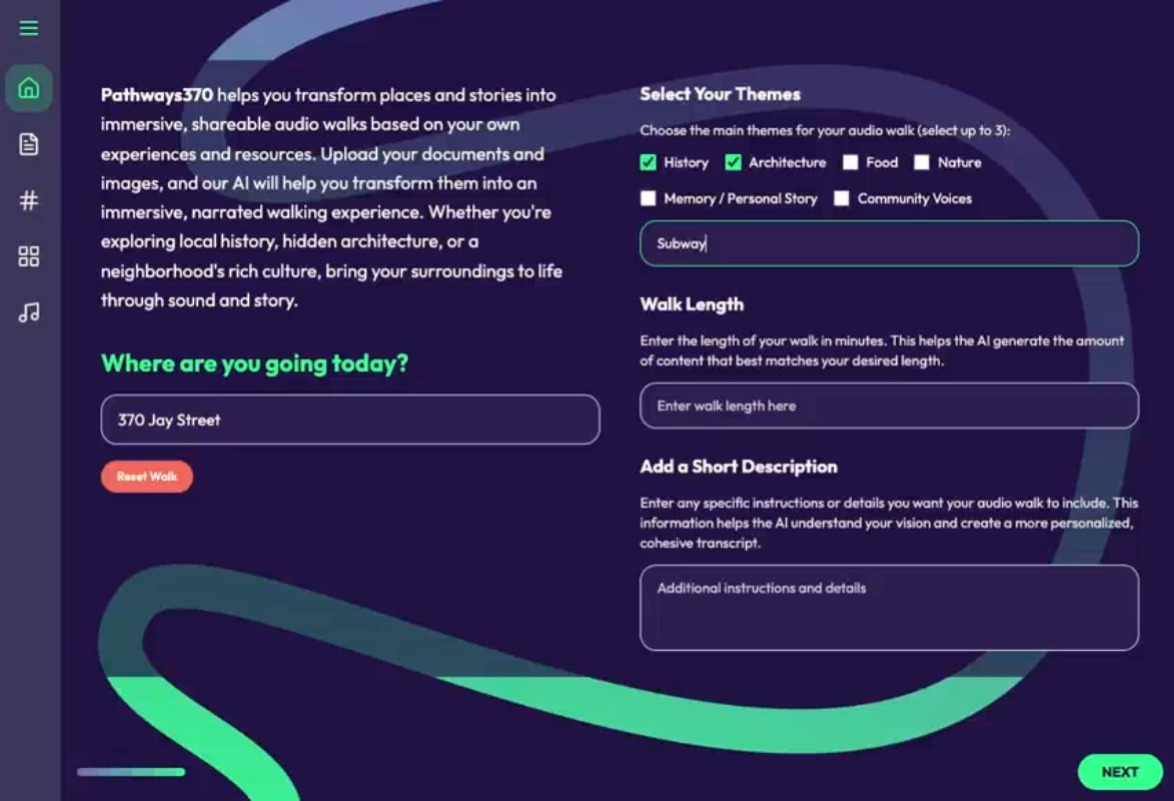
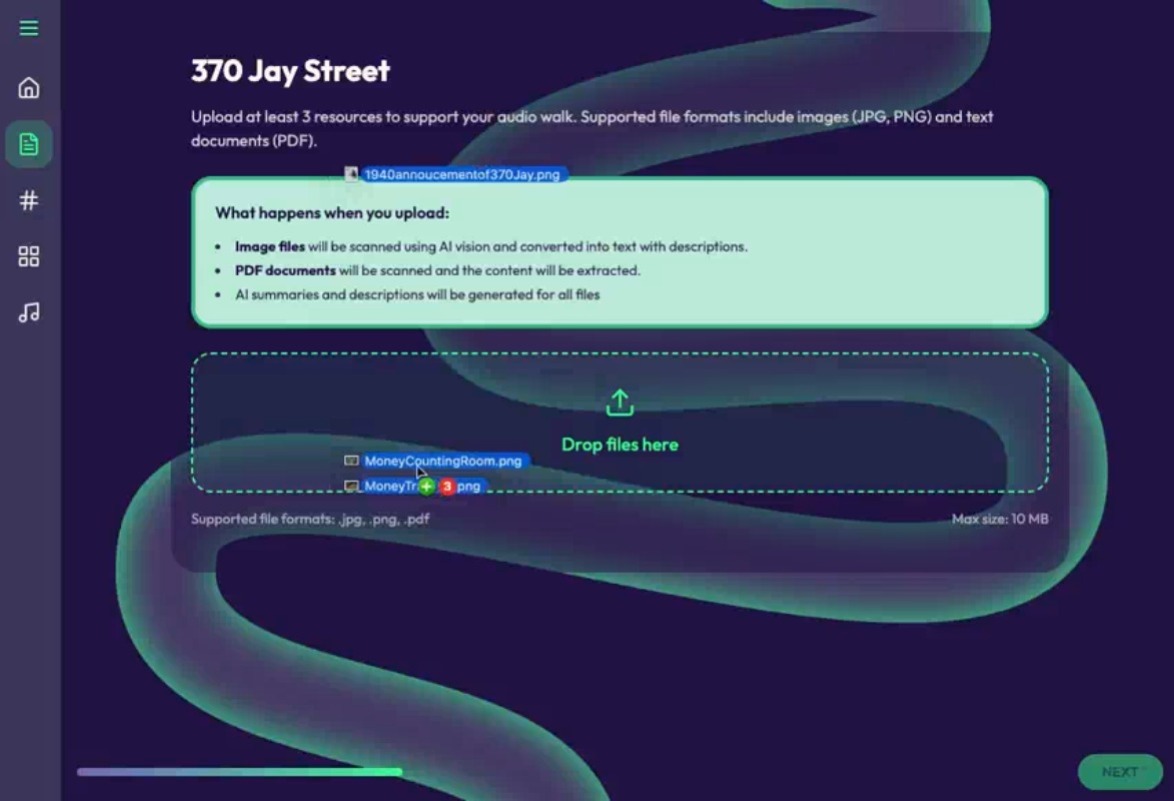
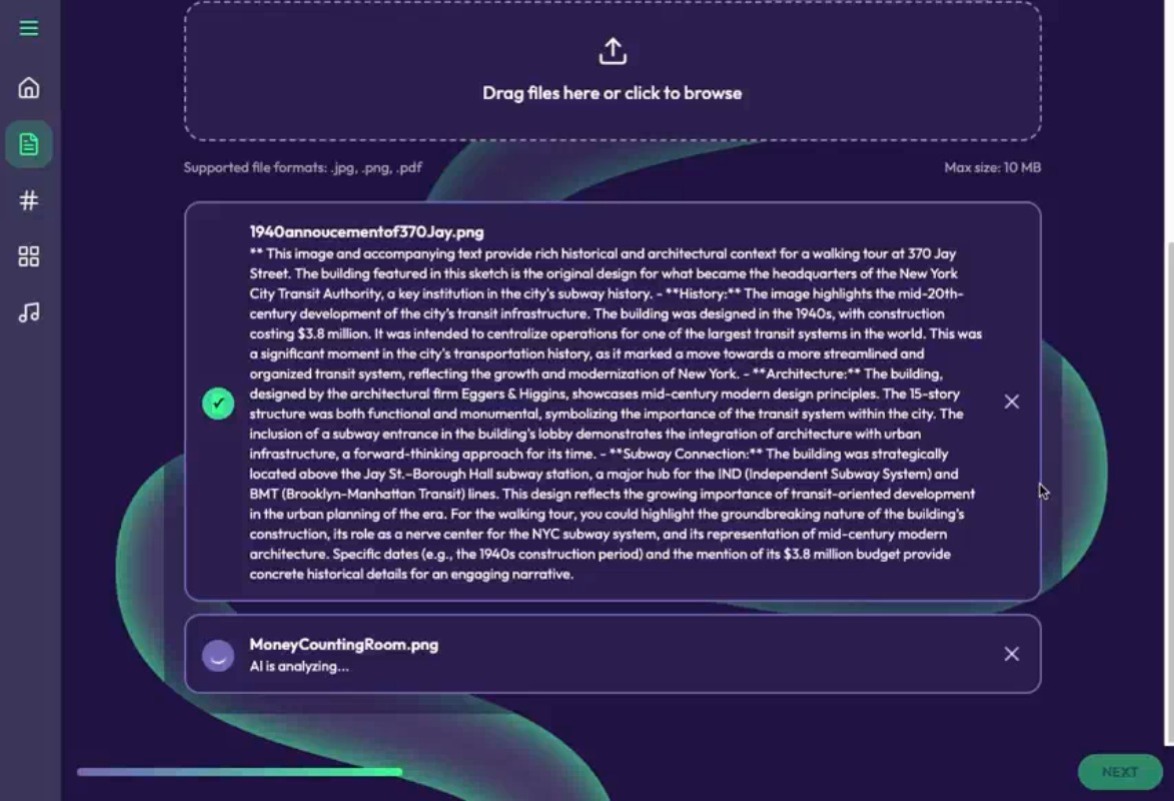
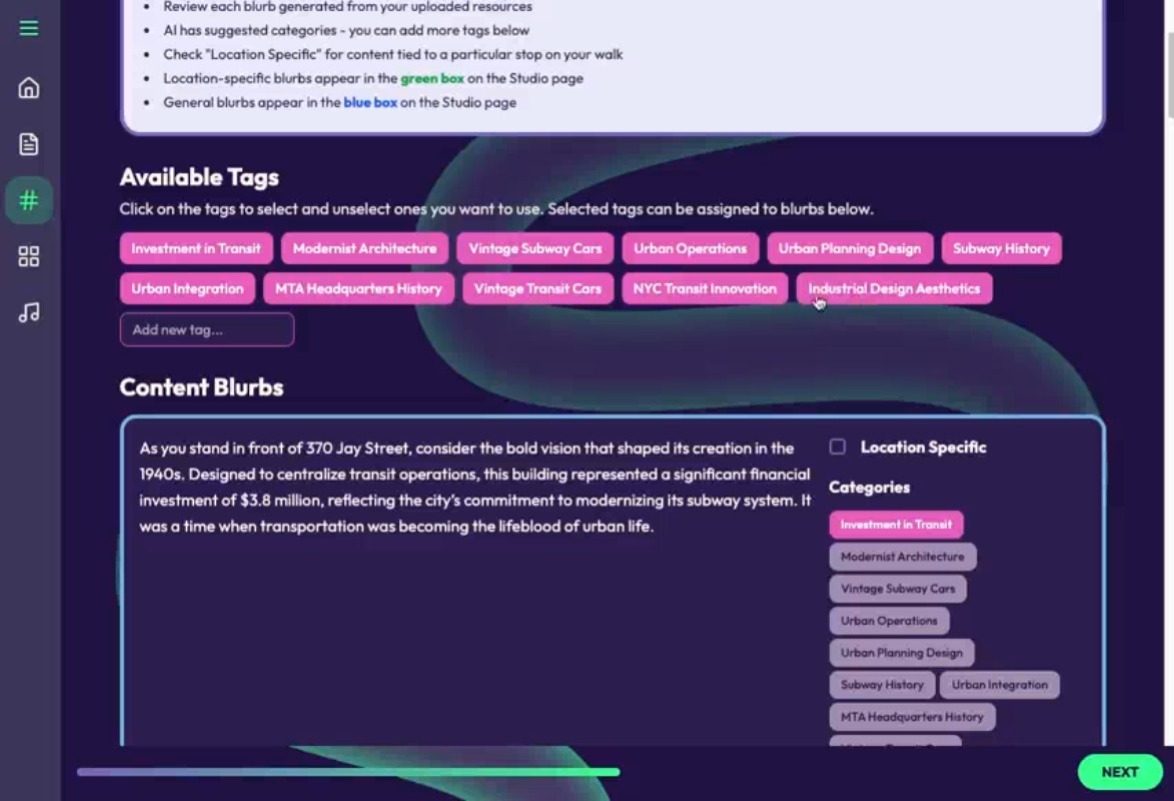
The core design challenge was translating complex creative work into an intuitive, guided experience. In order to manage cognitive load, we broke up the creation process into five stages:
- Welcome: Define walk location, themes, and scope
- Archive: Upload and classify source materials
- Categorize: Organize content into thematic blocks
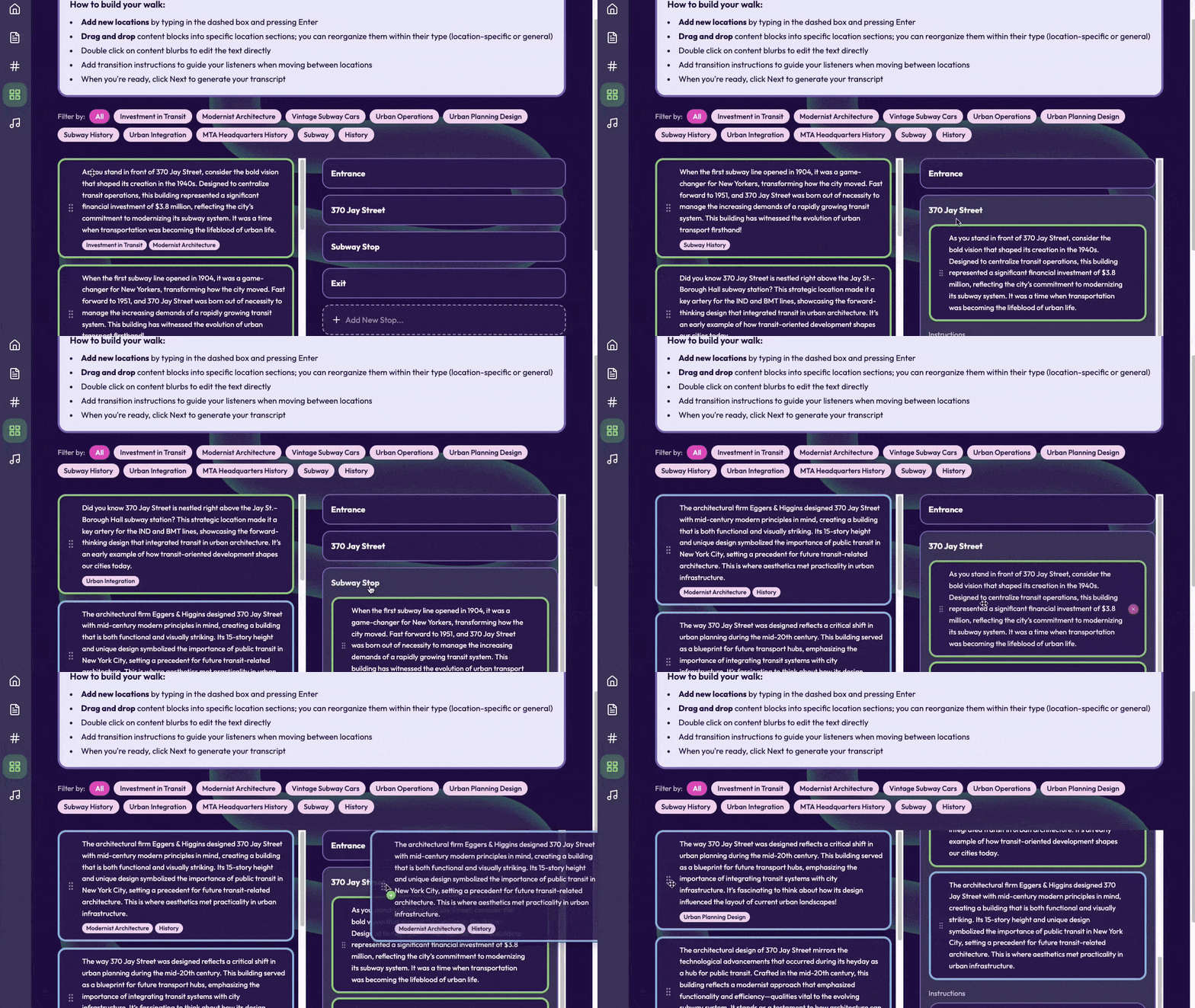
- Studio: Design the walk’s path and organize content in locations
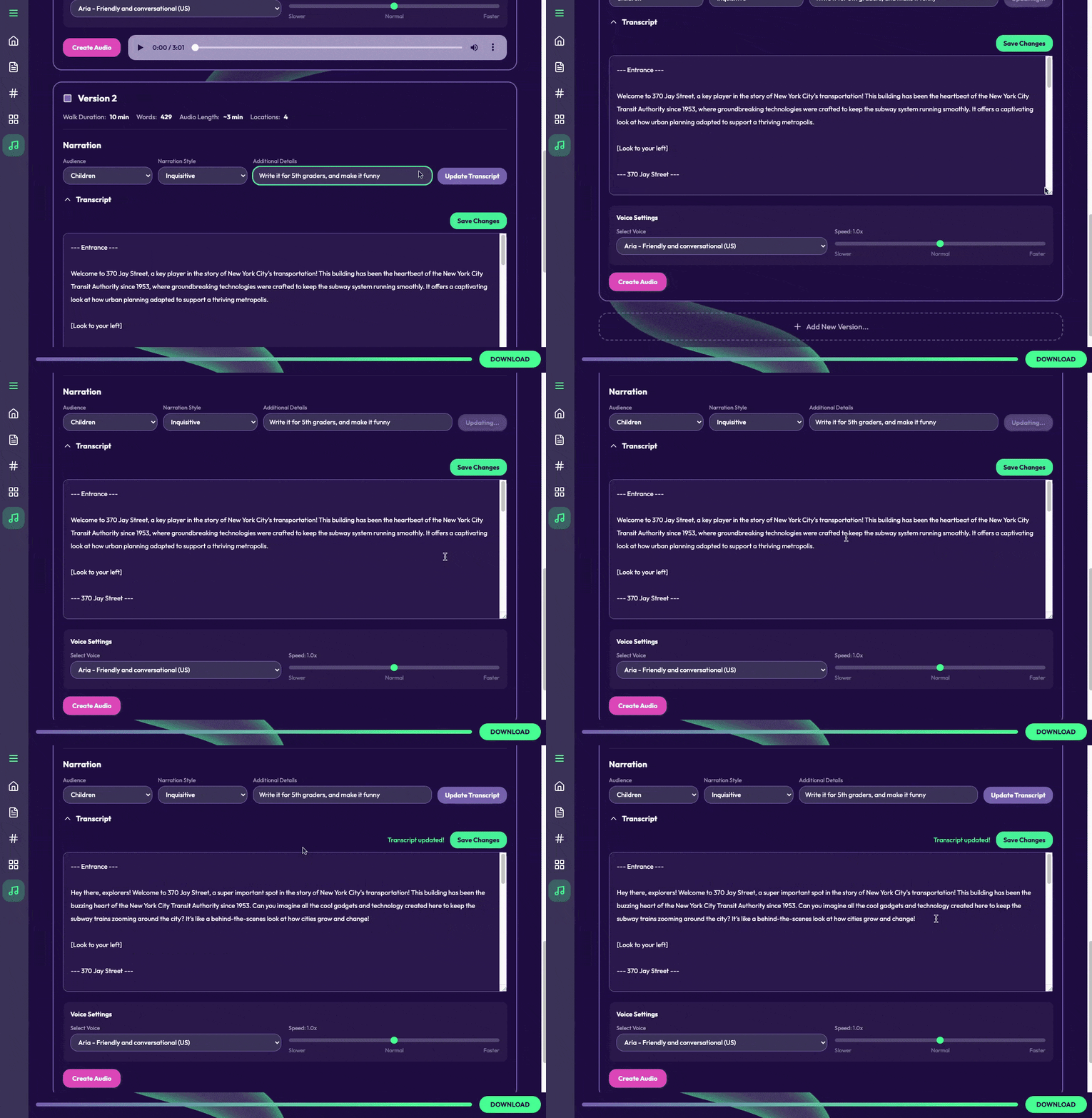
- Audo: Customize and export the final audiowalk narrative script & audio
This structure breaks a complex task into manageable, sequential steps, reducing the overwhelm of starting these projects.
User-Centered Design
We also wanted to make the process seamless and intuitive for those with limited technical expertise, while still emphasizing user agency and authorship. To this end, we analyzed our user needs & design goals to see where we could leverage AI capabilities to improve user engagement and creation, rather than simply replacing it. AI is embedded across the creation pipeline to support users’ needs, making the process of sharing knowledge more equitable and accessible.
The Role of AI
In short, AI:
- Extracts and summarizes uploaded materials
- Generates short, customizable content blocks that can be sorted into location blocks–stops along the audio walk
- Generates full transcripts based on the structured walk content, customized by audience, tone, and other controls
- Converts script into audio
Creating an audiowalk is a complex task involving research synthesis, narrative structuring & content organization, and audio production. AI reduces this complexity by transforming unstructured input into usable content and streamlining the production, but allows users the final say on what goes in–-and what comes out.
Core Interactions ↑
As one of the front-end team, my role was particularly focused on the design and development of the user’s side.
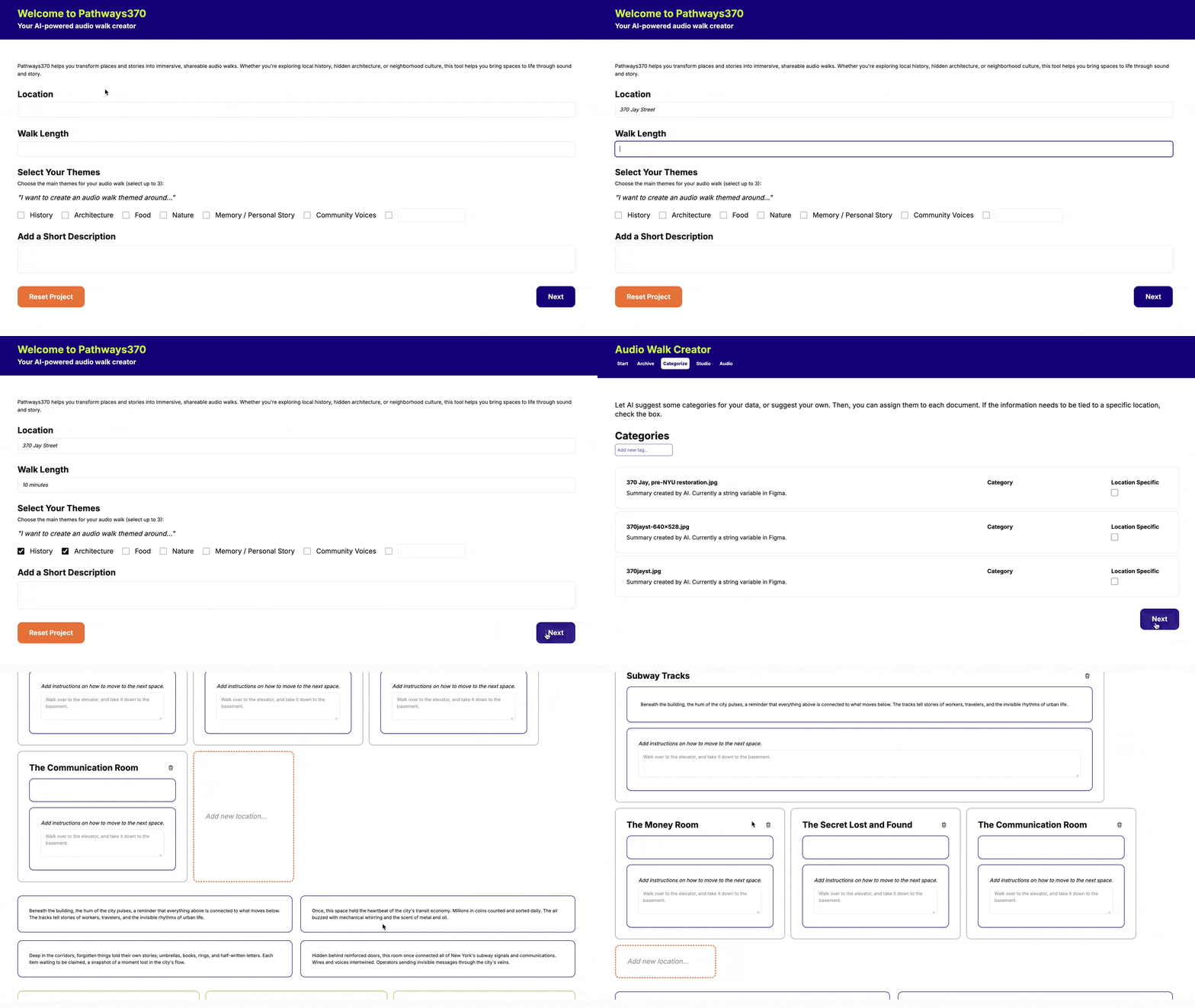
Early prototypes started with a simple paper mapping of a user’s path to create an audio walk, which became a Figma design to test and visualize the user’s journey through the interface.
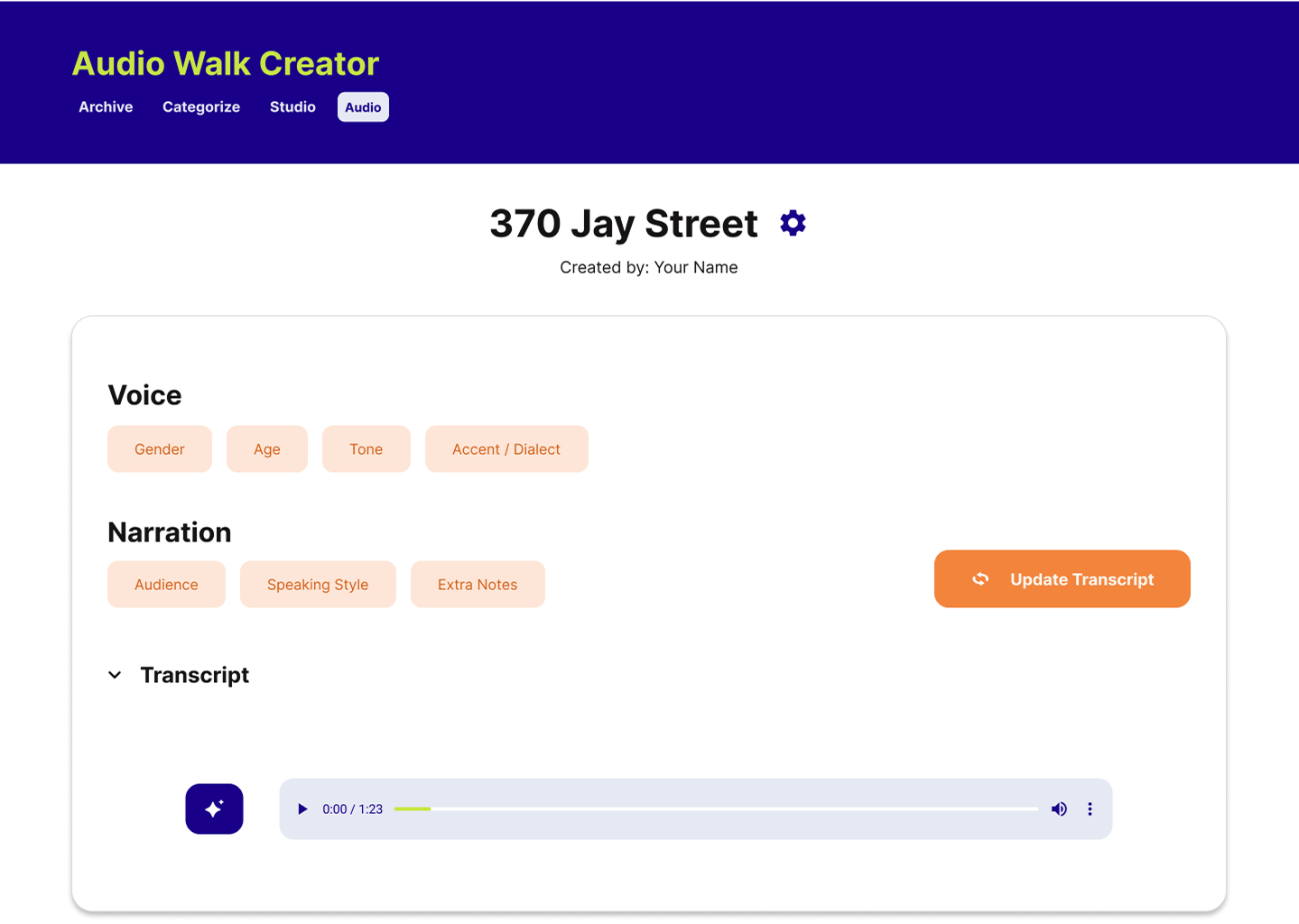
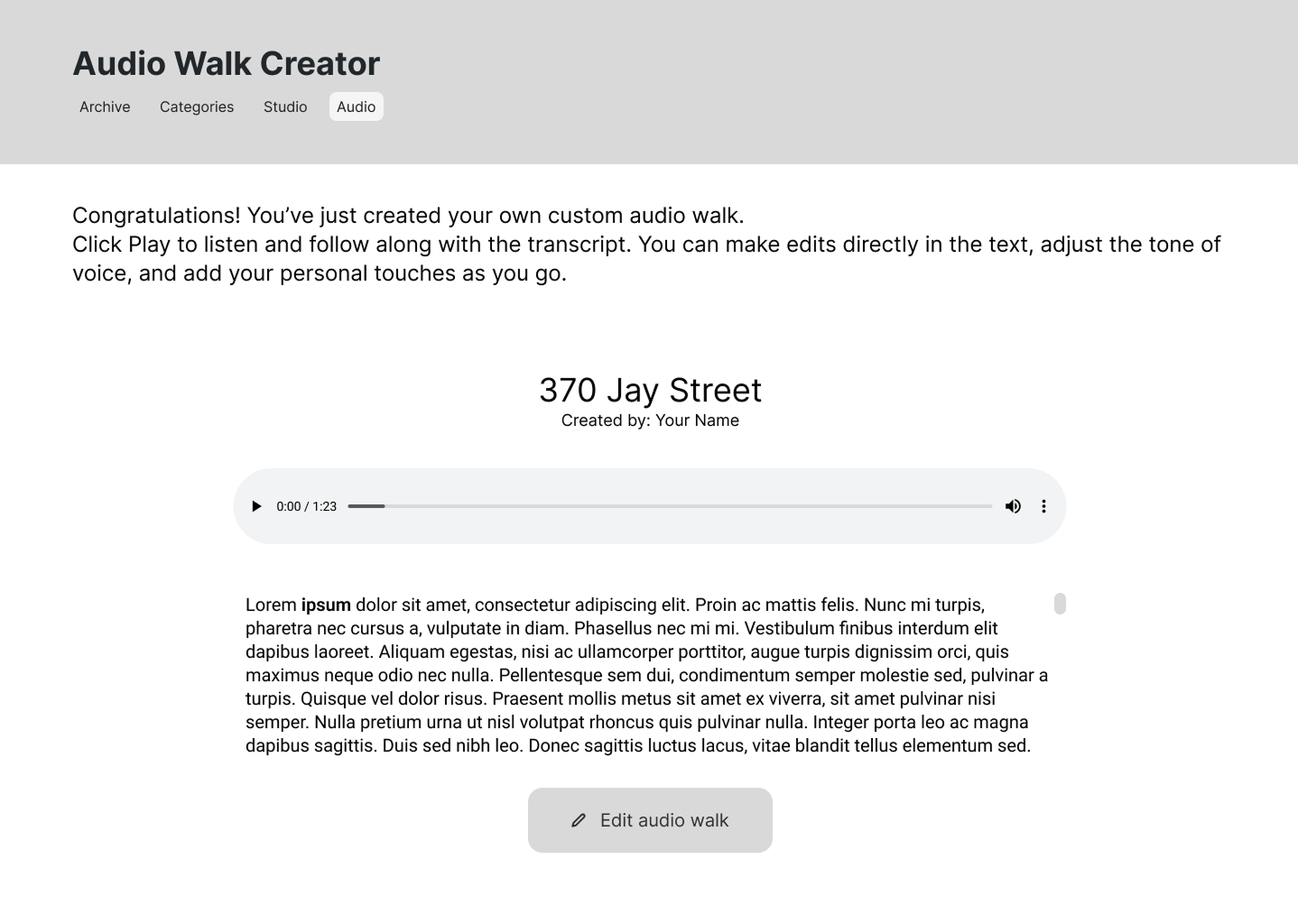
Mid-fidelity prototypes focused on building and testing the core functions of Pathway370, utilizing AI-powered design tools like Builder.io and Replit to prototype user input and connection to the backend.
High-fidelity prototypes centered on fine-tuning the balance of user autonomy and control with AI efficiency, redesigning the UI to be more intuitive and linking up with the back-end system to create a fully functional web app.
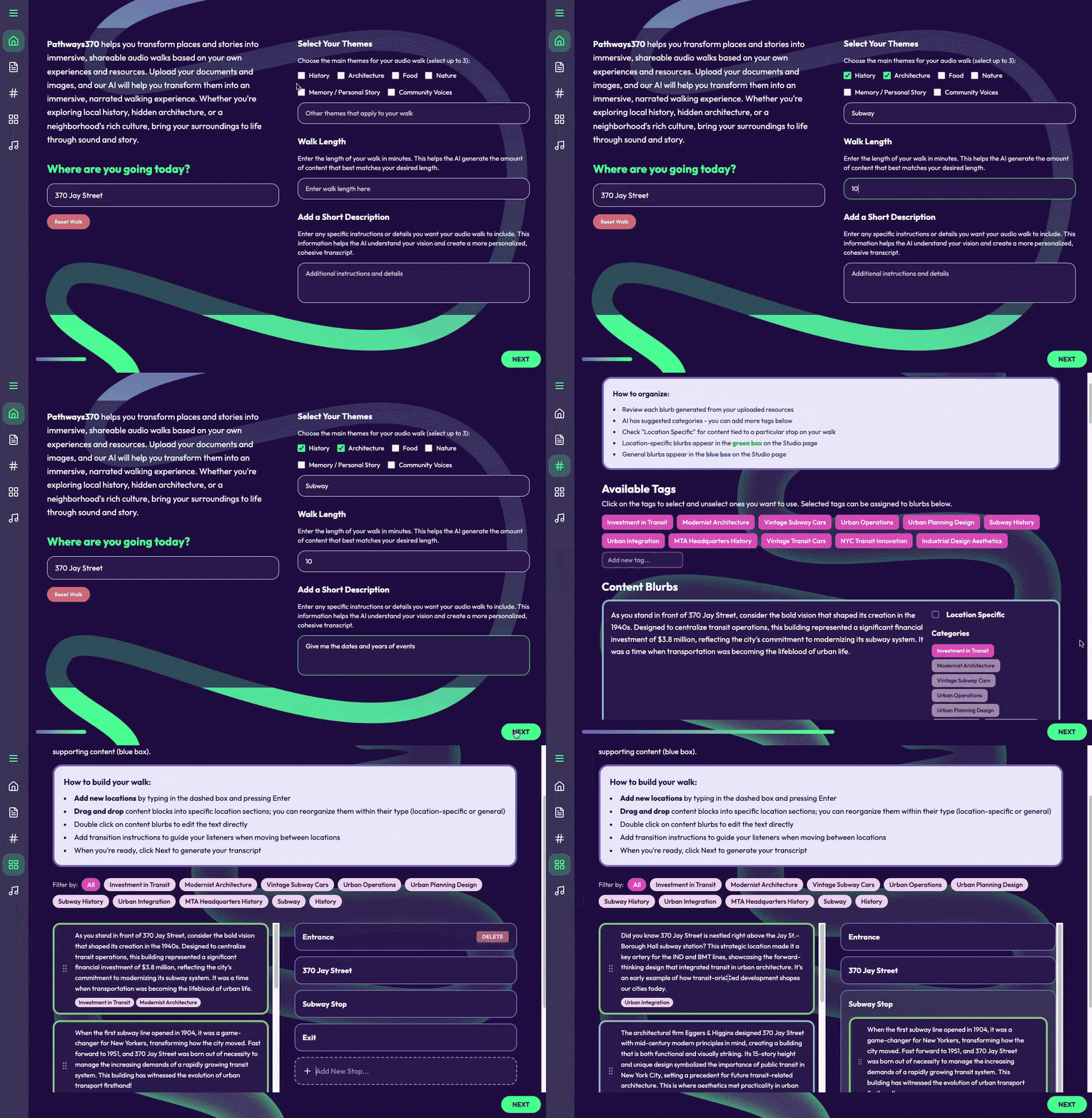
See our detailed prototyping process here.
User Testing ↑
We conducted remote user testing with six participants across two conditions:
- Controlled: Provided resources and location
- Open-ended: User-selected content and location
Overall, there was a strong agreement that Pathways370 could support community storytelling and cultural preservation, though there were mild usability concerns, particularly around the categorization steps.
Takeaway ↑
At the beginning of this project, I was wary and unsure about using AI. As a person, I disliked the way AI often devalues and replaces human creativity; and as a professional in learning sciences and design, I had my doubts about AI’s potential to augment learning and discovery beyond just spoonfeeding you facts. But throughout this project, I realized that the capabilities of AI, when deployed in the right places, can become something that augments human creativity and the joy of making things, rather than replacing it.
It also developed my understanding of the unique challenges and concerns when designing an AI-assisted system–it requires balancing efficiency with user control and trust. We approached Pathways370 as a collaborative tool rather than a simple prompt-output generative app, where AI supports creation but users retain full authorship.
Key Takeaways
- Effective AI tools should augment, not replace, human creativity.
- Supporting non-expert creators requires balancing guidance, automation, and authorship.
- Designing with AI is fundamentally about trust and control, not just functionality; there should be an emphasis on tool transparency and user agency.